
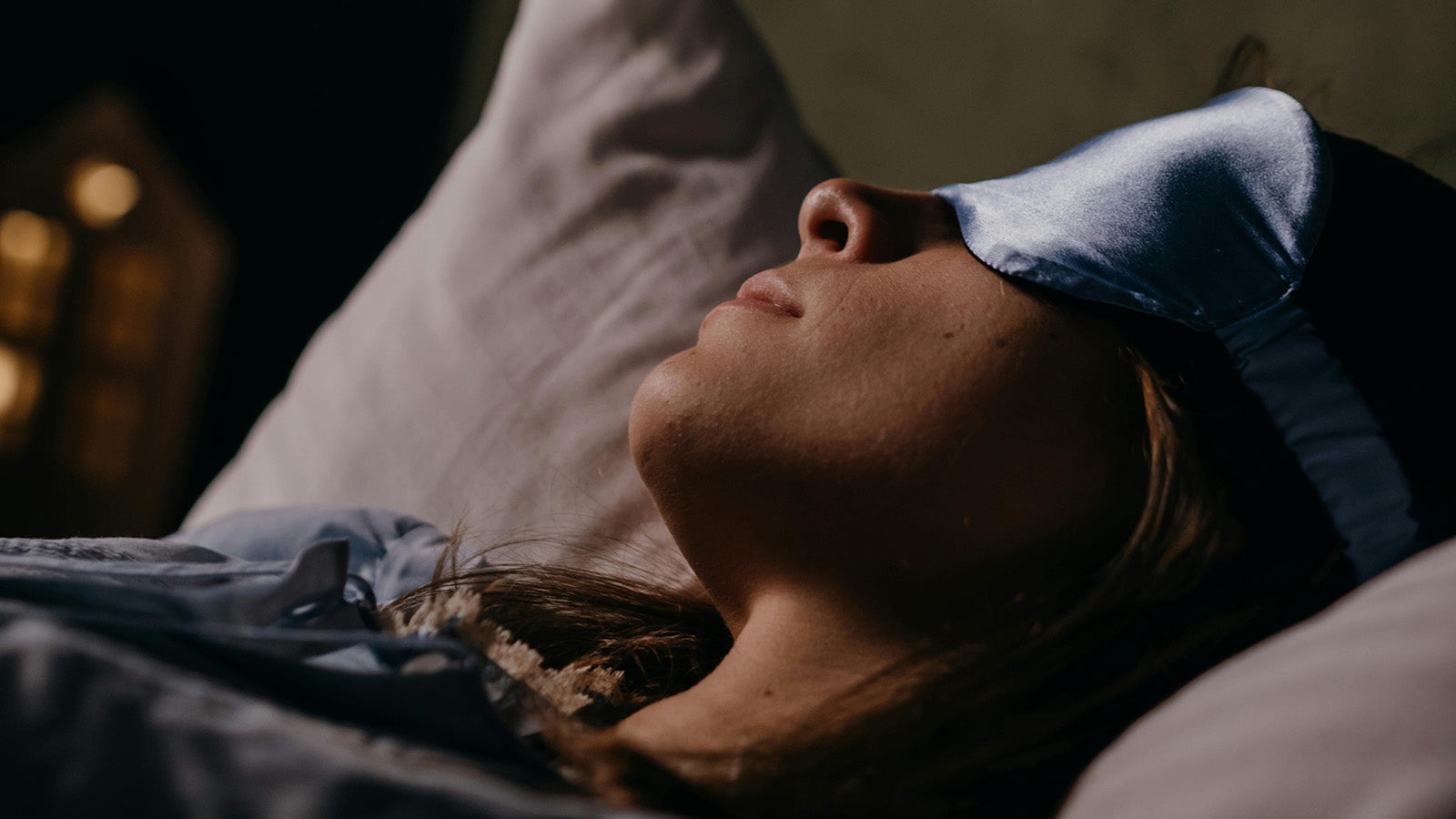
As the summer winds down and schedules tighten up, quality sleep is non-negotiable. But what if the key to a transformative night wasn't in your bed, but in shockingly cold water? Here’s the surprising science.
The long weekend is over, and with it, the unstructured days of summer. As we pivot into a busy fall, the number one priority for many of us is getting our sleep back on track. For years, the conventional wisdom has been to wind down, to seek warmth, quiet, and comfort before bed. But for those of us who lie awake with a racing mind, that advice often falls short.
What if science points to a more powerful, and admittedly paradoxical, solution? How can an experience that feels so jarringly awake—a plunge into cold water—possibly lead to the deep, restorative sleep you crave?
Let’s dive into the science. The answer is not only surprising but also incredibly promising.
The Body Temperature Paradox: To Fall Asleep, Your Body Must Get Colder
Before we discuss the cold, we need to understand a fundamental pillar of sleep science: a drop in your core body temperature is one of the most powerful biological signals your brain uses to initiate sleep. This is non-negotiable human biology. As evening approaches, your internal thermostat naturally begins to turn down, signaling to your brain that it's time to prepare for rest.
Many of our modern habits unknowingly sabotage this critical process. Intense late-night exercise, an overly warm bedroom, or even a hot bath taken too close to bedtime can keep your core temperature elevated, effectively telling your brain, "Not yet, it's not time to sleep." The key to unlocking better sleep is to work with this natural process, not against it.
How a Cold Plunge Hacks Your Internal Thermostat for Sleep
This is where we resolve the paradox. A correctly timed cold plunge is one of the most effective tools for deliberately managing your body’s temperature curve for sleep. The process happens in three distinct phases.
Phase 1: The Shock (The Part You Know)
When you first enter the cold water, your body has an immediate and intense reaction. Your sympathetic nervous system—your "fight-or-flight" response—kicks into high gear. You feel a surge of adrenaline and norepinephrine, and you become hyper-alert. This is real, it's powerful, and it is the absolute last thing you want to experience right before your head hits the pillow. But it's only the first step.
Phase 2: The 'Rebound Effect' (The Secret to Sleep)
The real magic happens after you get out of the water. Your body, sensing the cold, launches a powerful counter-reaction to warm itself up. To do this, it triggers massive peripheral vasodilation—widening the blood vessels in your skin, hands, and feet to push warm blood to the surface and release heat. While this makes your skin feel warm, it has the profound effect of pulling heat out from your core. Over the next couple of hours, this process leads to a significant and sustained drop in your core body temperature.
Think of it like dropping a stone in a pond. There's the initial splash (the cold shock), but the powerful, calming ripples are what follow. You're leveraging that rebound effect to perfectly time your body's cool-down for bedtime.
Phase 3: The Parasympathetic Rebound
Your nervous system works in a similar way. After the initial sympathetic jolt, your body doesn't just return to baseline; it often overcompensates with a powerful activation of its opposing system: the parasympathetic nervous system. This is your "rest-and-digest" network. This rebound effect promotes a deep sense of calm and physical relaxation that can last for hours, easing you into your evening.
The Protocol for Deep Sleep: Timing Is Everything
Understanding this science makes the protocol clear, simple, and non-negotiable.
The Golden Window: The 2-3 Hour Rule
Let me state this as clearly as possible: Do not take a cold plunge right before you plan to go to sleep. This is the most common mistake and will disrupt your sleep. The optimal, science-backed protocol is to take your cold plunge in the late afternoon or early evening, approximately 2 to 3 hours before your intended bedtime.
This timing is critical. It gives your body enough time to move past the initial alert phase of the adrenaline response and allows you to ride the powerful wave of the thermogenic and parasympathetic rebound right into a state of deep relaxation as you get into bed.
The End-of-Day Ritual, Made Effortless
This late-afternoon protocol is a game-changer for sleep, but to be effective, it needs to be sustainable. At the end of a mentally taxing day, the last thing anyone needs is another complex task. An always-ready, perfectly chilled tub transforms this powerful protocol from a potential chore into a simple, restorative ritual that seamlessly integrates into your end-of-day routine.
Sleep Science Q&A: Your Questions, Answered
Q1: I'm very sensitive to stimulants. Won't the adrenaline from the cold shock make me anxious and keep me awake? This is a valid and important concern. It’s precisely why the 2-3 hour timing protocol is critical. You strategically use that initial jolt of clean energy to productively finish your workday or make dinner, and then the powerful calming rebound effect takes over, easing you into your evening. The timing turns the initial stimulation from a bug into a feature.
Q2: Is this better than a hot bath or using a sauna before bed? They work via different, and sometimes opposing, mechanisms. Heat is excellent for muscle relaxation, but it raises your core body temperature. If done too close to bed, your body may not have enough time to cool down. A correctly timed cold plunge, on the other hand, provides a more powerful and direct signal for the essential body temperature drop that helps initiate deep, restorative sleep.
Q3: How soon will I notice an effect on my sleep quality? Many people report feeling a sense of profound calm and finding it easier to fall asleep on the very first night they follow the protocol correctly. However, the most significant improvements in objective sleep metrics—like an increase in deep sleep and REM sleep—are typically seen after one to two weeks of consistent practice as your body adapts to the new rhythm.
Conclusion: Don't Just End Your Day, Transform Your Night
The struggle for better sleep can be frustrating. A properly timed cold plunge offers a scientifically-backed tool to work with your body’s natural biology, regulating your core temperature and calming your nervous system to prepare you for a night of deep rest.
Stop chasing sleep. Start preparing for it. The plunge is your tool to not only conquer the day, but to truly own the night, waking up refreshed, restored, and ready for what's next.
Share:
Why Cold Plunges Can Boost Work Efficiency
Which Is More Invigorating A Cold Plunge Or Coffee